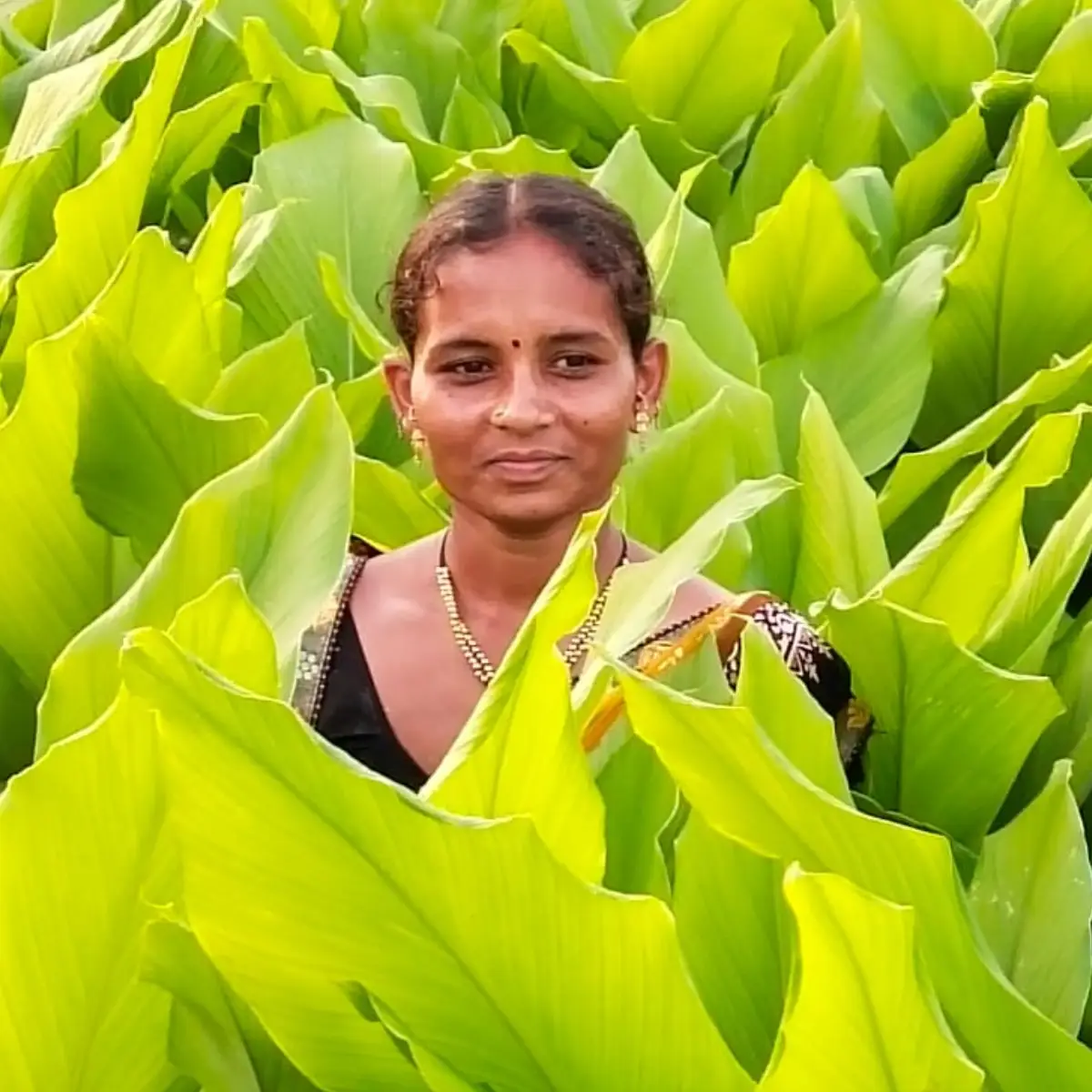
Savita Kashinath Shinde, 32, a farmer from Haldav village, moved from selling raw turmeric to processing it into branded powder — and a more stable income for her family of 12.

TRUST
RTI, audits, and legal documents.
PROGRAMMES
Filter by state, theme, type, status.
APPROACH
Nine themes across rural livelihoods.
Eight programmes for rural professionals.
Studies on Adivasi livelihoods.
PROOF
Reach across six themes.
STORIES
Stories, blog and films in one filterable hub.
PRESS
Press kit, mentions, releases and social.
DATA AND DOWNLOADS
BRLF Profile and Case for Support.
LEARN
Field-facing modules in local languages.
CONVENINGS
Samanvay and other BRLF convenings.
WORK WITH US
Active procurement RFPs.
Donate
·
Savita Kashinath Shinde, 32, a farmer from Haldav village, moved from selling raw turmeric to processing it into branded powder — and a more stable income for her family of 12.
Savita’s family of 12, spanning three generations with six members farming full-time, had cultivated soybean and turmeric for years, relying heavily on chemical fertilizers and pesticides. Over time, this pushed up production costs while steadily degrading the soil — a familiar story in Haldav, a rain-fed village of 351 households where water turns scarce every summer.
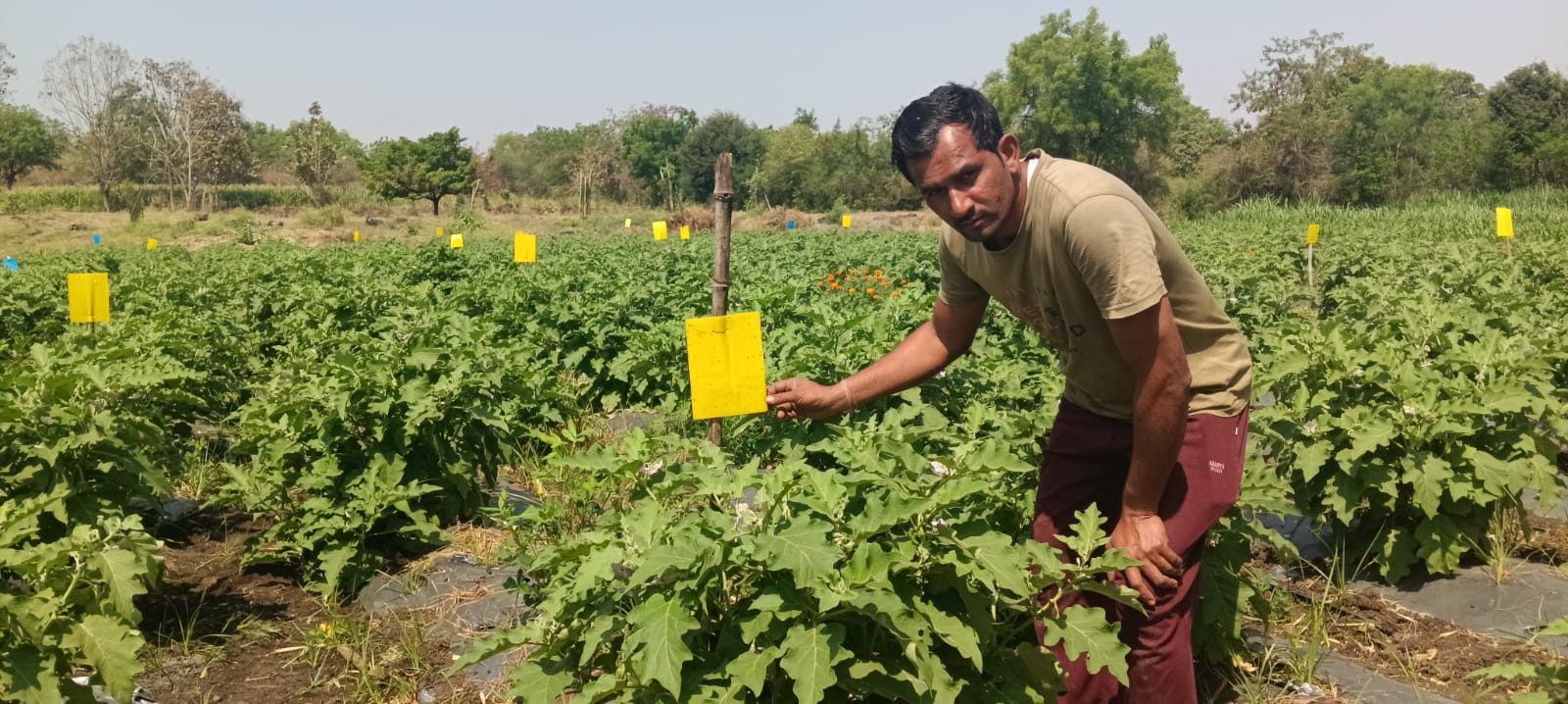
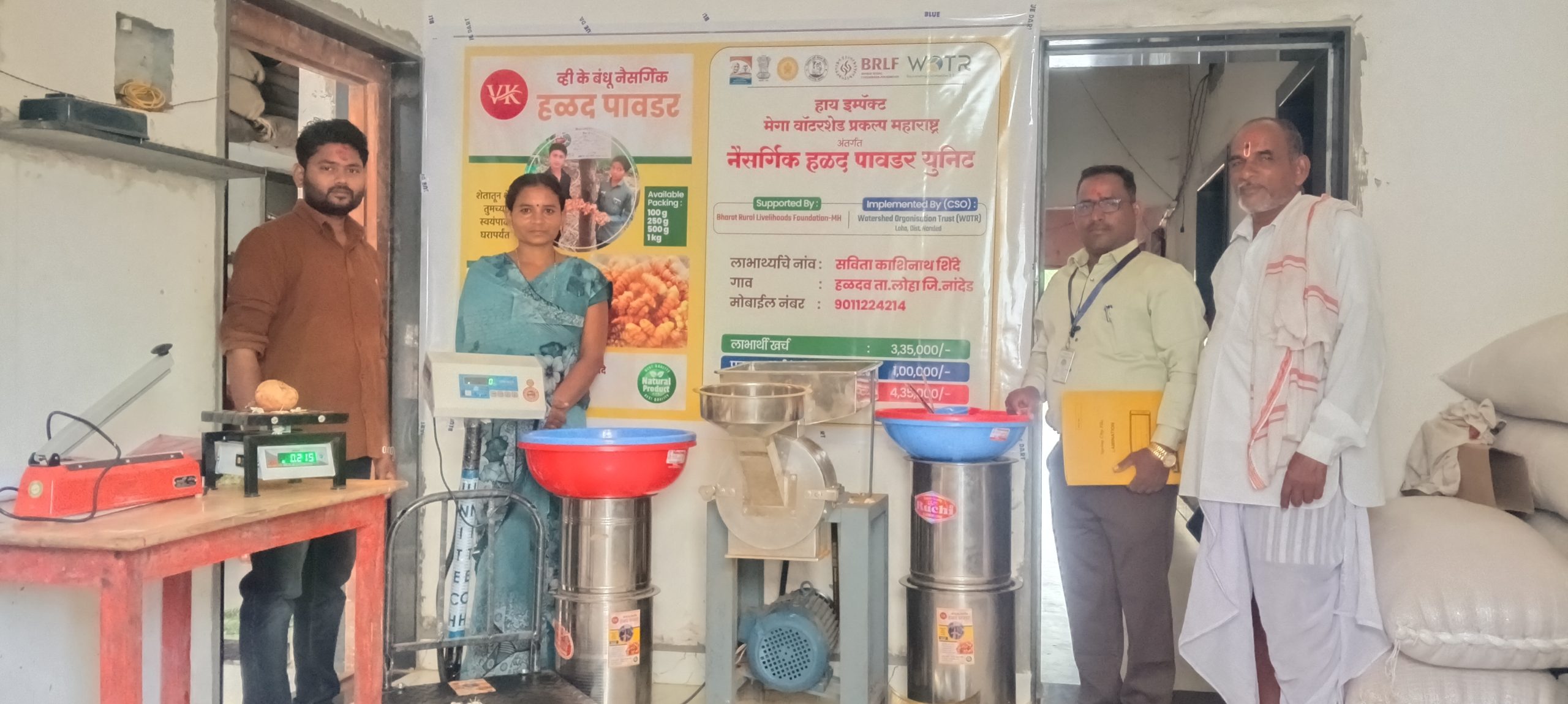
Savita adopted Jeevamrut for soil nutrition and Dashparni Ark as an eco-friendly pest control, along with yellow, blue, and pheromone traps to manage pests without chemicals. She began producing her own vermicompost, moving her farm step by step toward fully organic practices. She then took it further, processing her turmeric harvest into powder and selling it in branded packets rather than as raw produce.
Production costs came down, soil fertility improved, and her dependence on chemical inputs dropped sharply. The shift to branded turmeric powder significantly boosted her family’s income, enabling better education and healthcare for her children and greater financial stability at home. Savita has since become a reference point for other farmers, several of whom have visited her farm to learn firsthand.
From a family managing rising costs and declining soil health, the Shindes are now seen as agri-entrepreneurs in their own community.
Read how communities across the tribal belt are building new livelihoods.
·
Aghanmoti Rathia’s one acre used to lie fallow every Rabi season. This year it grew groundnut, sunflower, greens, and gourd.
·
Bimla Rathia had given up goat rearing after disease wiped out her herd. Training and support rebuilt it into her family’s most reliable income.
·
Ram Pyari once earned about ₹23,040 a year growing paddy. Within one watermelon season, she nearly matched that in profit alone.
·
Aghanmoti Rathia’s one acre used to lie fallow every Rabi season. This year it grew groundnut, sunflower, greens, and gourd.
·
Bimla Rathia had given up goat rearing after disease wiped out her herd. Training and support rebuilt it into her family’s most reliable income.
·
Ram Pyari once earned about ₹23,040 a year growing paddy. Within one watermelon season, she nearly matched that in profit alone.