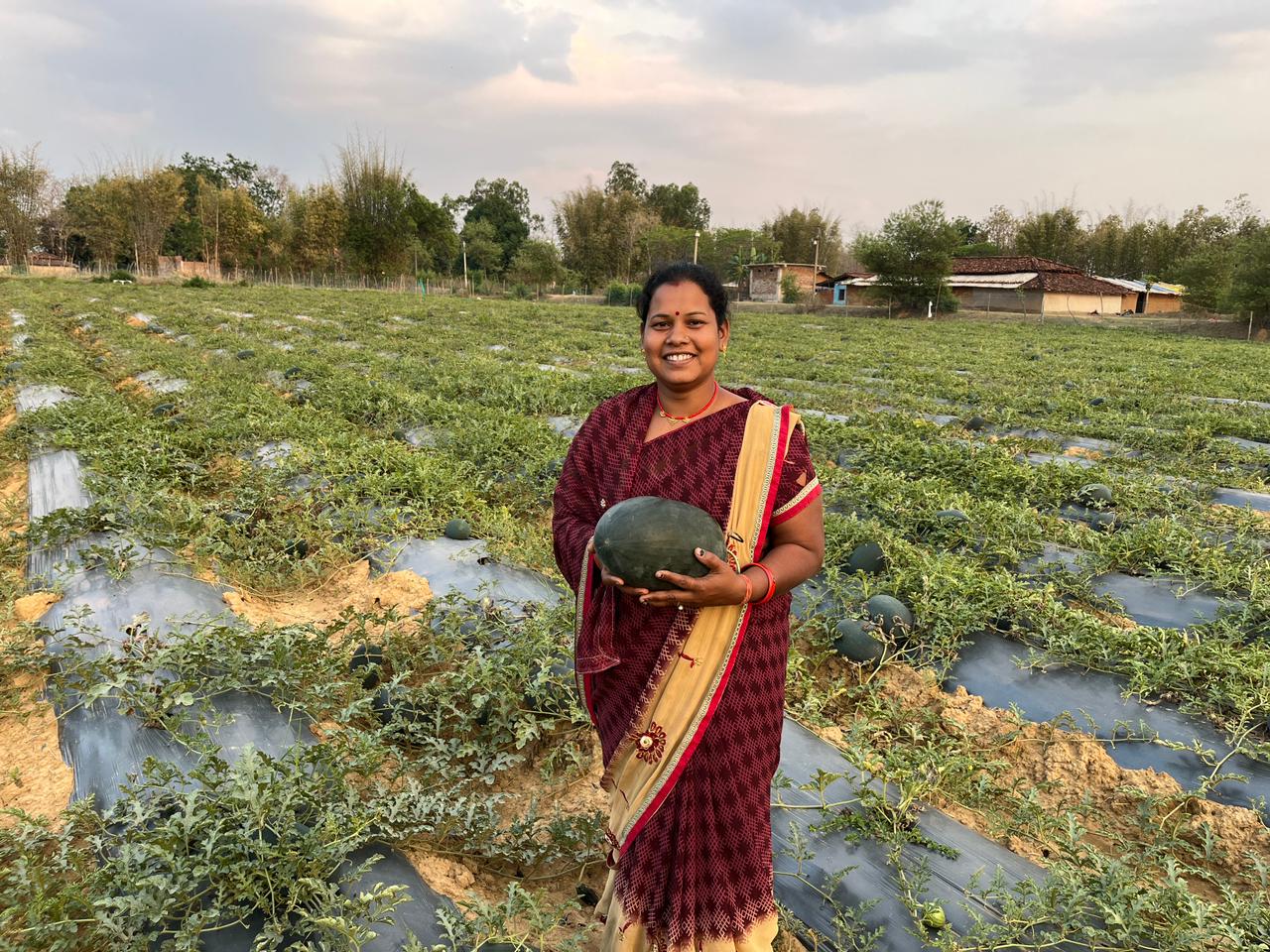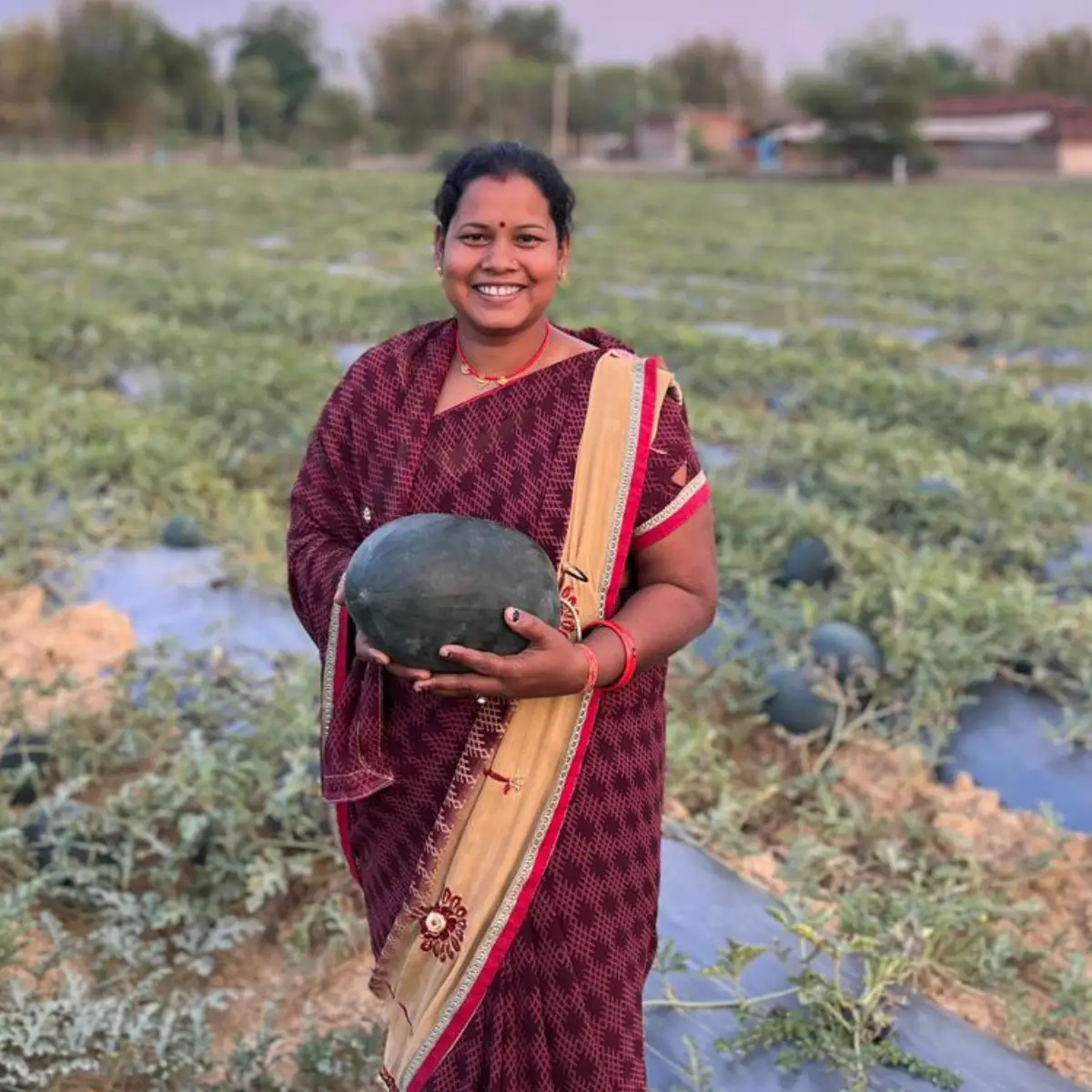
Ram Pyari once earned about ₹23,040 a year growing paddy on her 1.5 acres in Baneya village. Within one watermelon season, she nearly matched that in profit alone.

TRUST
RTI, audits, and legal documents.
PROGRAMMES
Filter by state, theme, type, status.
APPROACH
Nine themes across rural livelihoods.
Eight programmes for rural professionals.
Studies on Adivasi livelihoods.
PROOF
Reach across six themes.
STORIES
Stories, blog and films in one filterable hub.
PRESS
Press kit, mentions, releases and social.
DATA AND DOWNLOADS
BRLF Profile and Case for Support.
LEARN
Field-facing modules in local languages.
CONVENINGS
Samanvay and other BRLF convenings.
WORK WITH US
Active procurement RFPs.
Donate
·
Ram Pyari once earned about ₹23,040 a year growing paddy on her 1.5 acres in Baneya village. Within one watermelon season, she nearly matched that in profit alone.
Ram Pyari, 34, supports a family of five on 1.5 acres of land in Baneya village. Farming a single low-return crop with limited knowledge of higher-value alternatives, and no access to improved inputs or techniques, kept her income low and uncertain year after year.
In November 2025, Ram Pyari connected with the BAIF Development Research Foundation through a livelihood initiative under the High Impact Mega Watershed Project. She was trained in crop management, mulching, irrigation, and organic farming, and given a battery sprayer for support. She took a ₹60,000 loan at 2% interest from Chhattisgarh State Rural Bank, sourced the Sagar King watermelon variety, and adopted sustainable inputs like Jeevamrit and Handi Dawa alongside drip irrigation on one acre of her land.
Within three months (December 2025 to February 2026), Ram Pyari produced 12 tonnes of watermelon. Selling it at ₹7 per kg earned her ₹84,000; after the ₹26,000 cultivation cost, she made a net profit of ₹58,000 in one season. Her family’s total annual income rose from ₹64,000 to ₹1,48,000 — more than double what it was before.
Ram Pyari plans to expand watermelon cultivation with early sowing and high-yielding varieties, move into off-season farming, and add oilseeds and pulses to keep her soil healthy long-term.
Read how communities across the tribal belt are building new livelihoods.
·
Aghanmoti Rathia’s one acre used to lie fallow every Rabi season. This year it grew groundnut, sunflower, greens, and gourd.
·
Bimla Rathia had given up goat rearing after disease wiped out her herd. Training and support rebuilt it into her family’s most reliable income.
·
Janwari Banra was selected as a Mate under MGNREGA in 2022 — a role that transformed both her income and her village’s water security.
·
Aghanmoti Rathia’s one acre used to lie fallow every Rabi season. This year it grew groundnut, sunflower, greens, and gourd.
·
Bimla Rathia had given up goat rearing after disease wiped out her herd. Training and support rebuilt it into her family’s most reliable income.
·
Ram Pyari once earned about ₹23,040 a year growing paddy. Within one watermelon season, she nearly matched that in profit alone.