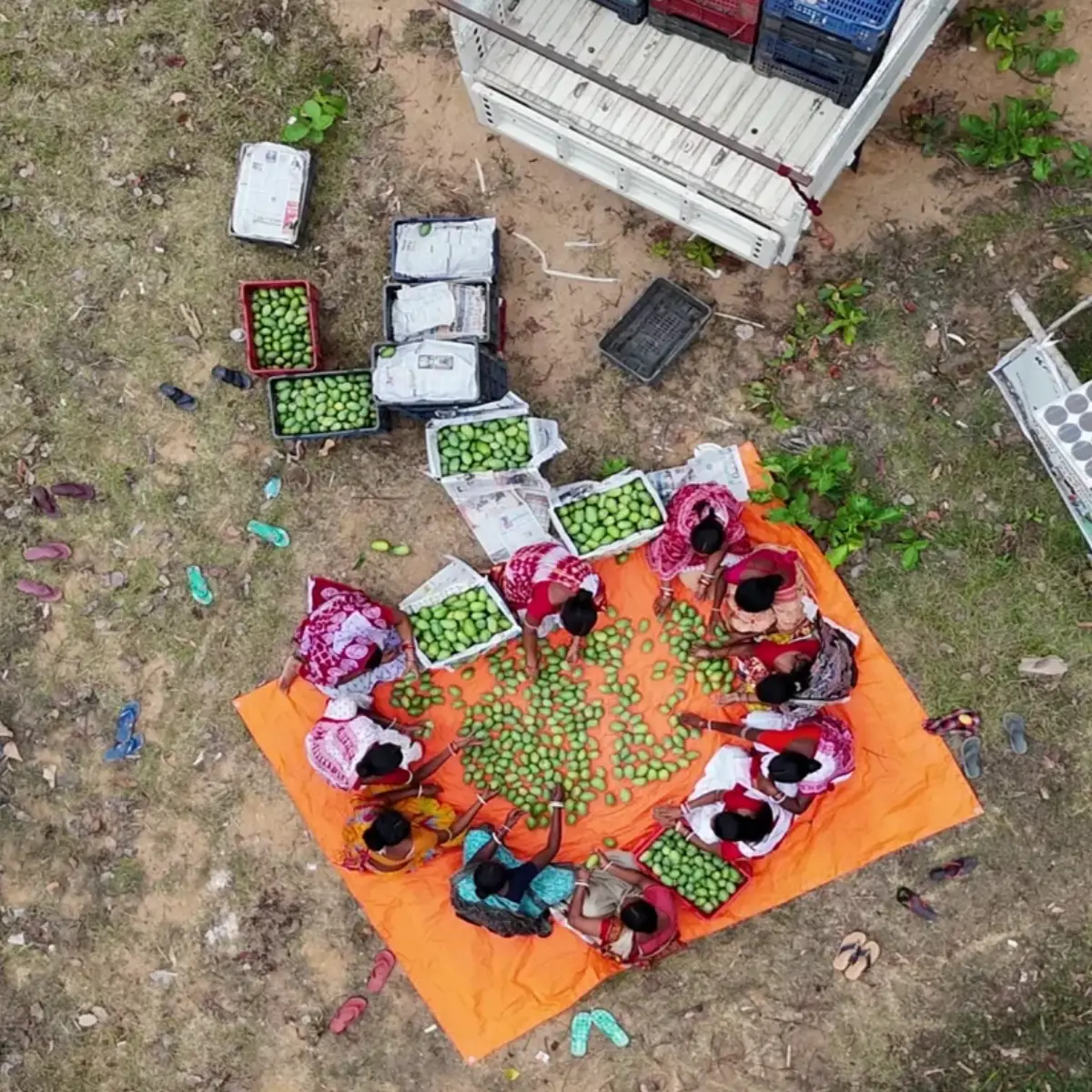
The women of the Maa Kaluni Producer Group grew mangoes with care for years, but their hard work rarely paid off. Selling through middlemen kept their income low – until they decided to sell together instead.

TRUST
RTI, audits, and legal documents.
PROGRAMMES
Filter by state, theme, type, status.
APPROACH
Nine themes across rural livelihoods.
Eight programmes for rural professionals.
Studies on Adivasi livelihoods.
PROOF
Reach across six themes.
STORIES
Stories, blog and films in one filterable hub.
PRESS
Press kit, mentions, releases and social.
DATA AND DOWNLOADS
BRLF Profile and Case for Support.
LEARN
Field-facing modules in local languages.
CONVENINGS
Samanvay and other BRLF convenings.
WORK WITH US
Active procurement RFPs.
Donate
·
The women of the Maa Kaluni Producer Group grew mangoes with care for years, but their hard work rarely paid off. Selling through middlemen kept their income low – until they decided to sell together instead.
Despite the region’s strong mango production, the group’s income stayed limited. Selling through local middlemen meant low prices, and without proper pest management or market knowledge, the women couldn’t capture the full value of their harvest.
The group took part in a value chain training programme, learning scientific grading, sorting, and post-harvest handling, along with what buyers in bigger markets look for. They began presenting their produce differently – and started selling collectively instead of individually, pooling produce to connect directly with wholesale buyers in Bihar, Jharkhand, and Uttar Pradesh.
Mangoes from Kankadahad soon reached buyers as far as Italy and England – a first for this group of smallholder women farmers. Selling collectively also meant better prices: the group now earns nearly three times what they used to get through middlemen, with transparent deals and payments on time.
The Maa Kaluni Producer Group is now known across the block for what women farmers can achieve together – inspiring other groups to follow the same path.
Read how communities across the tribal belt are building new livelihoods.
·
Aghanmoti Rathia’s one acre used to lie fallow every Rabi season. This year it grew groundnut, sunflower, greens, and gourd.
·
Bimla Rathia had given up goat rearing after disease wiped out her herd. Training and support rebuilt it into her family’s most reliable income.
·
Ram Pyari once earned about ₹23,040 a year growing paddy. Within one watermelon season, she nearly matched that in profit alone.
·
Aghanmoti Rathia’s one acre used to lie fallow every Rabi season. This year it grew groundnut, sunflower, greens, and gourd.
·
Bimla Rathia had given up goat rearing after disease wiped out her herd. Training and support rebuilt it into her family’s most reliable income.
·
Ram Pyari once earned about ₹23,040 a year growing paddy. Within one watermelon season, she nearly matched that in profit alone.