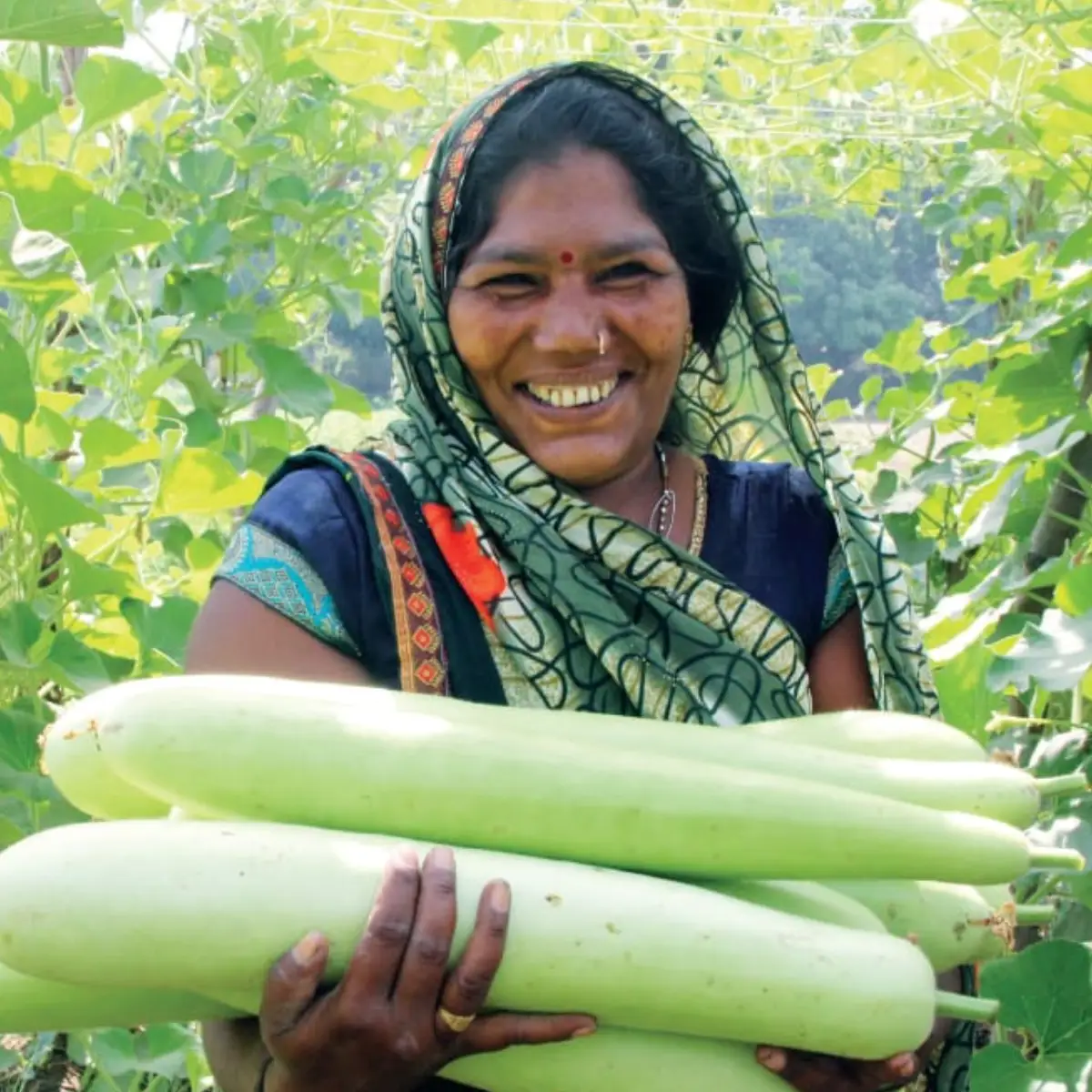
Aghanmoti Rathia’s one acre of cultivable land in Banhar village used to lie fallow every Rabi season for lack of irrigation. This year, that same land grew groundnut, sunflower, greens, and gourd.

TRUST
RTI, audits, and legal documents.
PROGRAMMES
Filter by state, theme, type, status.
APPROACH
Nine themes across rural livelihoods.
Eight programmes for rural professionals.
Studies on Adivasi livelihoods.
PROOF
Reach across six themes.
STORIES
Stories, blog and films in one filterable hub.
PRESS
Press kit, mentions, releases and social.
DATA AND DOWNLOADS
BRLF Profile and Case for Support.
LEARN
Field-facing modules in local languages.
CONVENINGS
Samanvay and other BRLF convenings.
WORK WITH US
Active procurement RFPs.
Donate
·
Aghanmoti Rathia’s one acre of cultivable land in Banhar village used to lie fallow every Rabi season for lack of irrigation. This year, that same land grew groundnut, sunflower, greens, and gourd.
Aghanmoti’s family of four depended on rainfed paddy and wage labour. In Kharif 2025, they harvested about 9 quintals of paddy from one acre, earning around ₹28,000, plus ₹12,000–15,000 from wage labour — a total household income of ₹40,000–45,000 a year. With no irrigation, their land stayed unused every Rabi season, and they spent nearly ₹5,000 a year buying vegetables for the household.
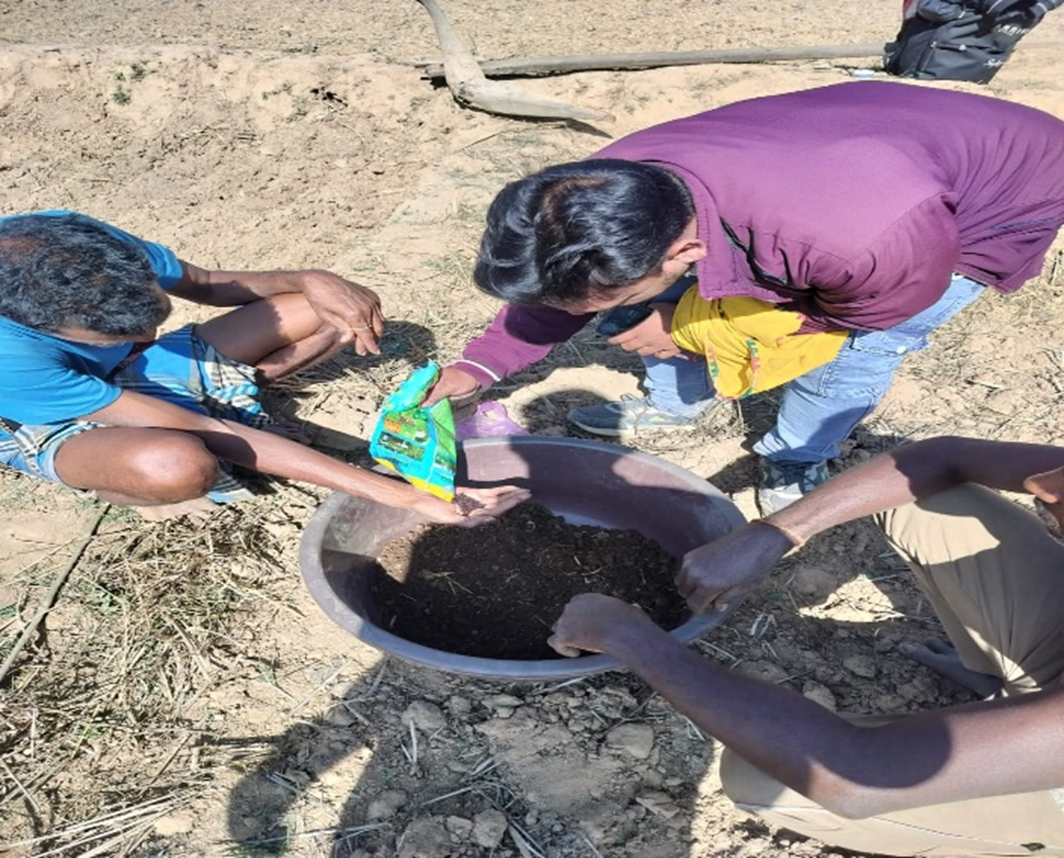
Under CG HIMWSP 2.0, implemented by Lok Shakti Samiti, Aghanmoti joined the Durga Groundnut Producer Group in Banhar. The project team introduced groundnut cultivation with sunflower as an intercrop on her fallow land, provided 200 grams of sunflower seed, and trained her in seed treatment and scientific crop management. They also demonstrated a Multi-Layer Farming Model on 2.5 dismil of land, combining groundnut with red amaranth and bottle gourd, with continuous field-level guidance throughout.
In the 2025–26 Rabi season, Aghanmoti harvested 6.30 quintals of groundnut, earning ₹44,100, plus ₹1,800 from 12 litres of sunflower oil. The Multi-Layer Farming Model added ₹1,600 from red amaranth and ₹3,000 from bottle gourd. Combined with her Kharif paddy income, the family’s total agricultural income reached ₹78,500 — up from ₹40,000–45,000 — while fresh home-grown vegetables cut their food expenses.
Aghanmoti hopes the proposed MGNREGA well will bring year-round irrigation, higher cropping intensity, and further gains for her family’s income and food security.
Read how communities across the tribal belt are building new livelihoods.
·
Bimla Rathia had given up goat rearing after disease wiped out her herd. Training and support rebuilt it into her family’s most reliable income.
·
Ram Pyari once earned about ₹23,040 a year growing paddy. Within one watermelon season, she nearly matched that in profit alone.
·
Janwari Banra was selected as a Mate under MGNREGA in 2022 — a role that transformed both her income and her village’s water security.
·
Aghanmoti Rathia’s one acre used to lie fallow every Rabi season. This year it grew groundnut, sunflower, greens, and gourd.
·
Bimla Rathia had given up goat rearing after disease wiped out her herd. Training and support rebuilt it into her family’s most reliable income.
·
Ram Pyari once earned about ₹23,040 a year growing paddy. Within one watermelon season, she nearly matched that in profit alone.