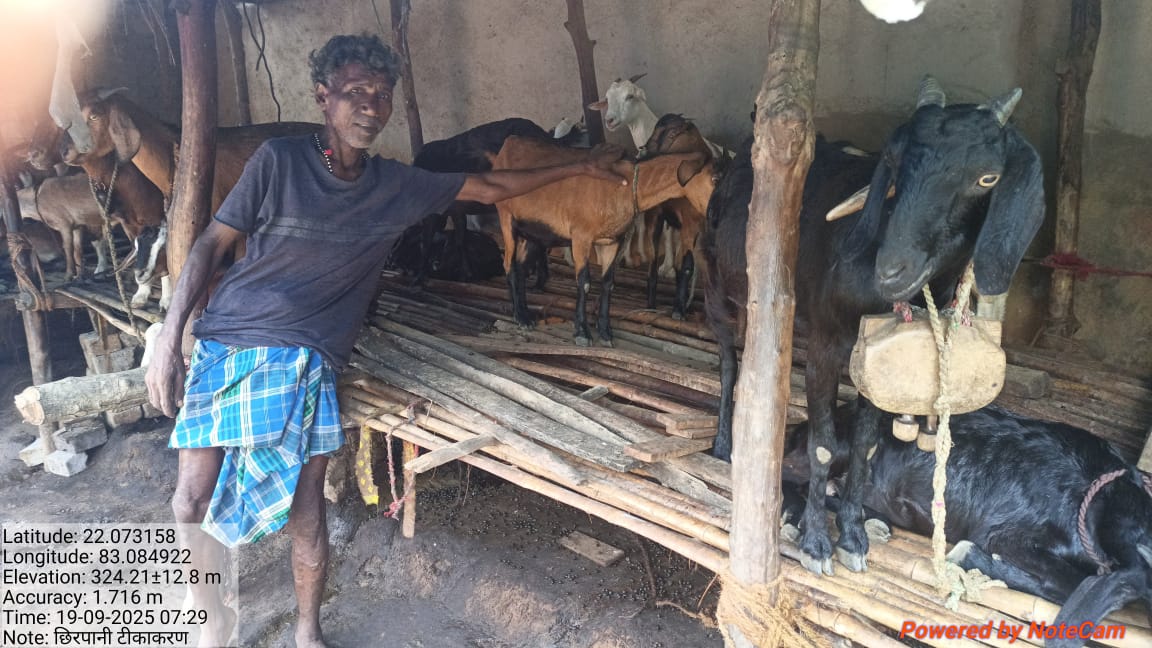
Bimla Rathia, 59, had tried goat rearing before — and given it up after disease wiped out her herd. With training and steady support, she built it back into her family’s most reliable income source.

TRUST
RTI, audits, and legal documents.
PROGRAMMES
Filter by state, theme, type, status.
APPROACH
Nine themes across rural livelihoods.
Eight programmes for rural professionals.
Studies on Adivasi livelihoods.
PROOF
Reach across six themes.
STORIES
Stories, blog and films in one filterable hub.
PRESS
Press kit, mentions, releases and social.
DATA AND DOWNLOADS
BRLF Profile and Case for Support.
LEARN
Field-facing modules in local languages.
CONVENINGS
Samanvay and other BRLF convenings.
WORK WITH US
Active procurement RFPs.
Donate
·
Bimla Rathia, 59, had tried goat rearing before — and given it up after disease wiped out her herd. With training and steady support, she built it back into her family’s most reliable income source.
Before the programme, Bimla’s household earned only about ₹40,000 a year, mainly from agriculture and wage labour, with almost no savings. Of their 3 acres of land, just 1.5 acres were cultivable. The family had raised goats before, but heavy mortality from disease and a lack of vaccination knowledge forced them to stop.
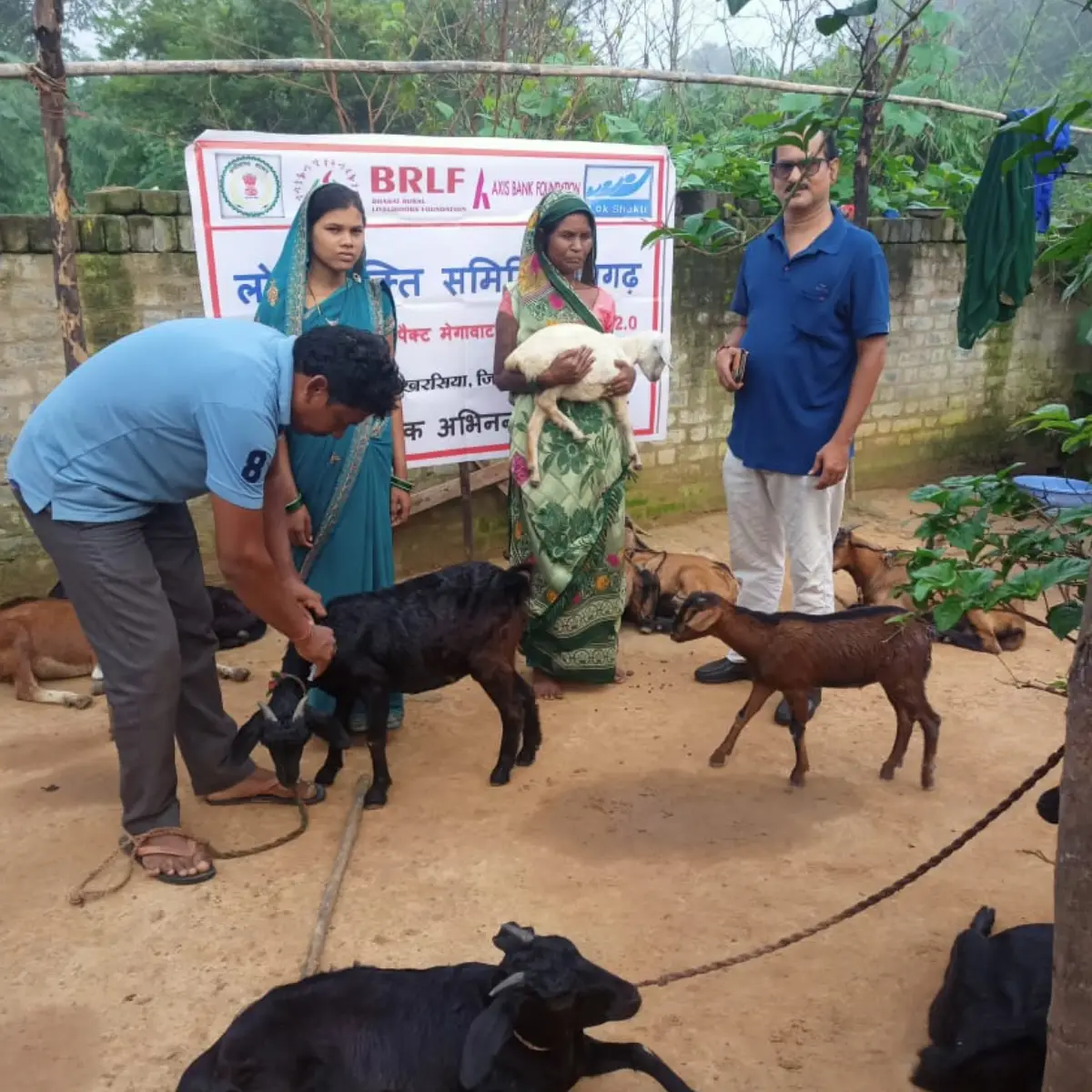
Under the High Impact Mega Watershed Project 2.0, Bimla received technical training on scientific goat rearing — shed management, vaccination, deworming, and animal care. She self-financed an initial stock of six desi goats (₹36,000) plus ₹6,000 on vaccination and medicines, and built an elevated machan shed from local materials. She was connected to the Animal Husbandry Department for regular veterinary support, with continuous mentoring from Lok Shakti Samiti over the following 36 months.
Goat mortality dropped from 30–40% to about 10% with better management and regular vaccination. Bimla has sold 25 goats to date — 14 in February 2025 for ₹99,225 and 11 in December 2025 for ₹77,220 — earning a total of ₹1,76,445 and a net profit of ₹1,38,000. She has saved ₹70,000, and the income helped fund her son’s wedding and everyday healthcare costs.
Encouraged by her results, Bimla plans to sell another 14–15 goats in 2026, and the family hopes to build a better home under PMAY with their savings.
Read how communities across the tribal belt are building new livelihoods.
·
Aghanmoti Rathia’s one acre used to lie fallow every Rabi season. This year it grew groundnut, sunflower, greens, and gourd.
·
Ram Pyari once earned about ₹23,040 a year growing paddy. Within one watermelon season, she nearly matched that in profit alone.
·
Janwari Banra was selected as a Mate under MGNREGA in 2022 — a role that transformed both her income and her village’s water security.
·
Aghanmoti Rathia’s one acre used to lie fallow every Rabi season. This year it grew groundnut, sunflower, greens, and gourd.
·
Bimla Rathia had given up goat rearing after disease wiped out her herd. Training and support rebuilt it into her family’s most reliable income.
·
Ram Pyari once earned about ₹23,040 a year growing paddy. Within one watermelon season, she nearly matched that in profit alone.