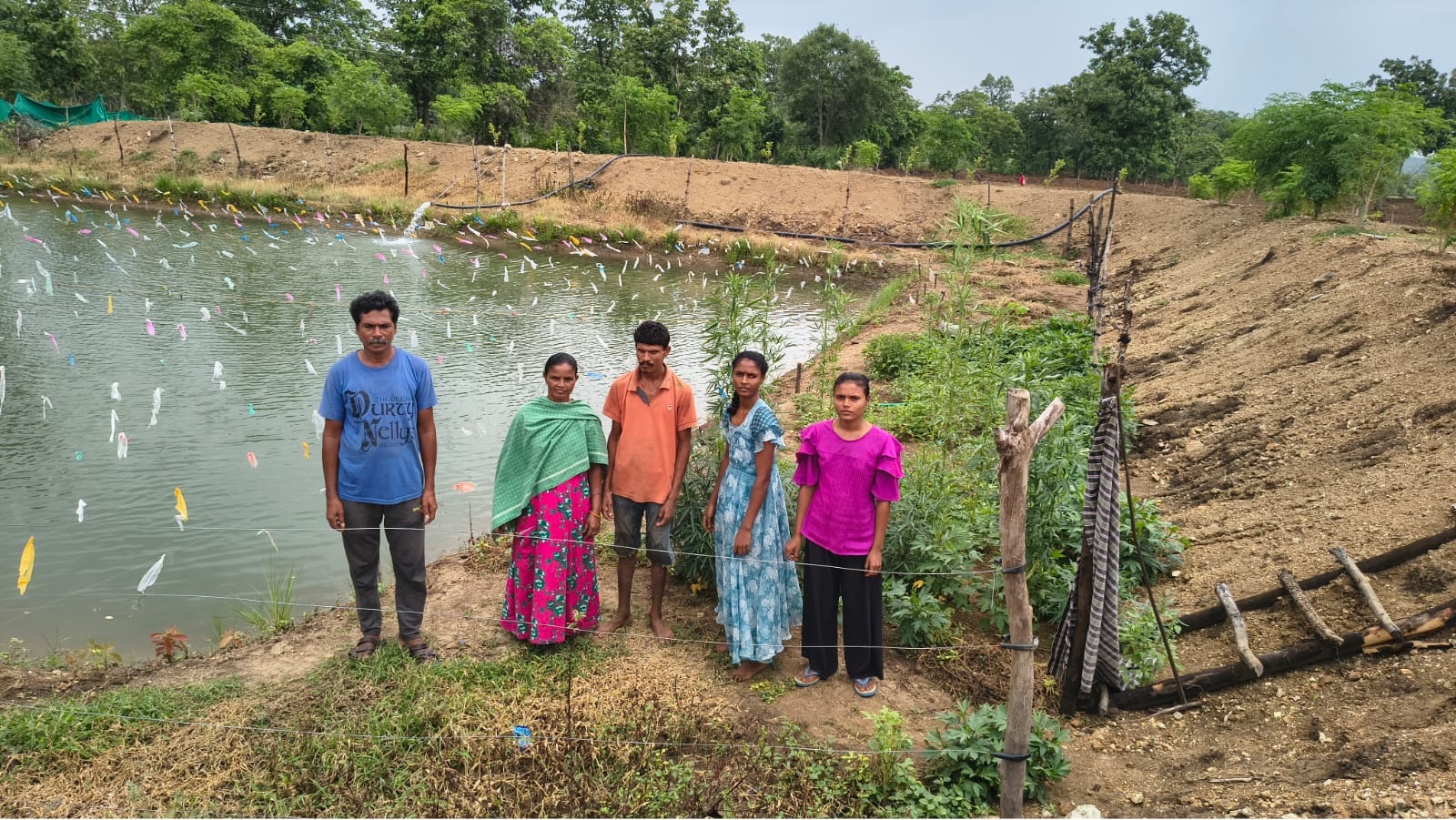
Poosam Mutyeshwarao once supported his family of seven on rain-fed cotton and paddy alone. “Earlier, I struggled to support my family due to crop failures and debt,” he says. Today, multiple income streams have changed that story.

TRUST
RTI, audits, and legal documents.
PROGRAMMES
Filter by state, theme, type, status.
APPROACH
Nine themes across rural livelihoods.
Eight programmes for rural professionals.
Studies on Adivasi livelihoods.
PROOF
Reach across six themes.
STORIES
Stories, blog and films in one filterable hub.
PRESS
Press kit, mentions, releases and social.
DATA AND DOWNLOADS
BRLF Profile and Case for Support.
LEARN
Field-facing modules in local languages.
CONVENINGS
Samanvay and other BRLF convenings.
WORK WITH US
Active procurement RFPs.
Donate
·
Poosam Mutyeshwarao once supported his family of seven on rain-fed cotton and paddy alone. “Earlier, I struggled to support my family due to crop failures and debt,” he says. Today, multiple income streams have changed that story.
Depending entirely on the rains for cotton and paddy, Poosam’s harvests failed whenever the rains failed or disease struck. He was pushed into debt, borrowing from local moneylenders just to get by. For a while, the whole family worked as daily wage labourers, but even that wasn’t enough to cover basic needs.
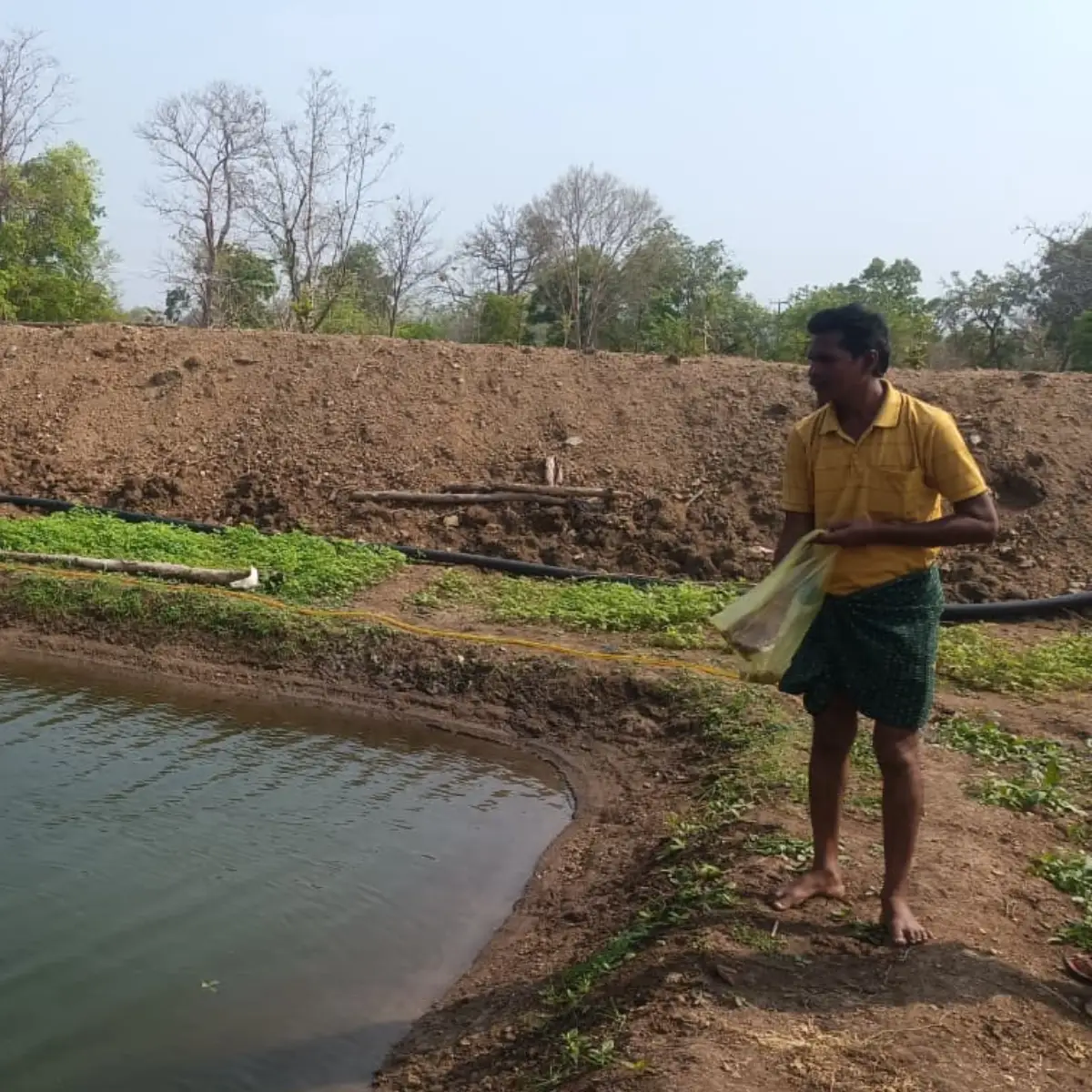
At a village meeting, Poosam spoke openly about his struggles and was selected to take up an Integrated Farming System on his land. He was trained in crop planning, water management, and organic techniques like Jeevamrutha and Panchagavya, along with collective vegetable marketing. A farm pond was dug and stocked with fish, and backyard poultry was set up alongside it — poultry waste feeding the fish in one connected, low-cost cycle.
Poosam began growing leafy vegetables along the bunds and pond edges, and took up tomato and ladyfinger cultivation nearby, selling locally. Fish and poultry waste doubled as organic manure, cutting his need for chemical fertiliser and lowering costs across the board. Between vegetables, fish, and poultry, he now has several income streams running through the year instead of one uncertain harvest.
With multiple income streams now running side by side, Poosam’s family has moved from one uncertain harvest a year to steady earnings through it.
Read how communities across the tribal belt are building new livelihoods.
·
Aghanmoti Rathia’s one acre used to lie fallow every Rabi season. This year it grew groundnut, sunflower, greens, and gourd.
·
Bimla Rathia had given up goat rearing after disease wiped out her herd. Training and support rebuilt it into her family’s most reliable income.
·
Ram Pyari once earned about ₹23,040 a year growing paddy. Within one watermelon season, she nearly matched that in profit alone.
·
Aghanmoti Rathia’s one acre used to lie fallow every Rabi season. This year it grew groundnut, sunflower, greens, and gourd.
·
Bimla Rathia had given up goat rearing after disease wiped out her herd. Training and support rebuilt it into her family’s most reliable income.
·
Ram Pyari once earned about ₹23,040 a year growing paddy. Within one watermelon season, she nearly matched that in profit alone.